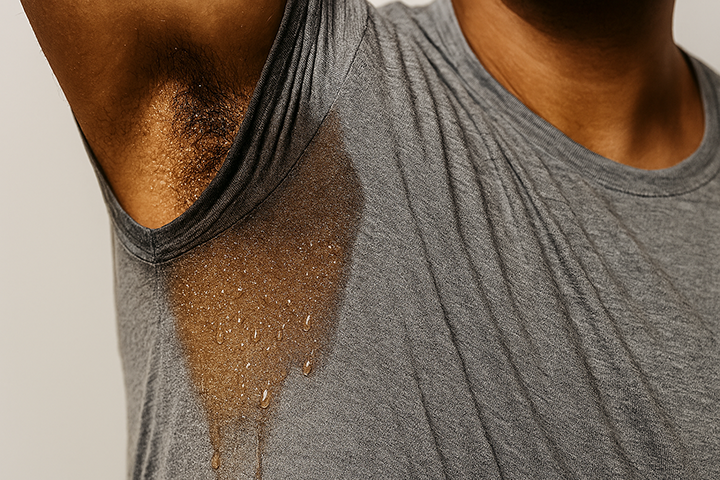
Understanding Hyperhidrosis
Sweating is one of the main ways that the body cools itself down. Sweat is 99% water and is produced by eccrine sweat glands. Nerve impulses from the brain travel down the spinal cord and communicate with nerve endings that stimulate eccrine glands to secrete sweat. Excessive sweating known as hyperhidrosis occurs when there is hyperactivation of sweat glands by nerve impulses.
Primary hyperhidrosis is the most common type and typically involves underarms, face, scalp, palms, and soles. Up to 80% of people with primary hyperhidrosis have a family history of hyperhidrosis.
It is important to check for underlying medical conditions that can cause excessive sweating (secondary hyperhidrosis), such as infection, tumors, medications, genetic syndromes or endocrine disorders.
Treatment Options
There are several effective treatments available for hyperhidrosis, ranging from topical solutions to advanced medical procedures:
- Topical Antiperspirants: Over-the-counter antiperspirants contain a metal such as zinc or aluminum salts which temporarily block the sweat ducts. Prescription strength antiperspirants can be obtained through a pharmacy.
- Oral Medications: Prescription medications can be prescribed that block the effects of the neurotransmitters that stimulate eccrine glands.
- Botulinum Toxin A Injections: FDA approved for injecting into eccrine glands to prevent the release of neurotransmitter chemicals from nerves. This is very effective and generally needs to be done about every 6 months to maintain dryness at an acceptable level.
- Iontophoresis: Tap water iontophoresis kits can be purchased and used at home 2-3 times a week. Iontophoresis can help block sweat ducts.
- Surgical Options: In severe cases, where none of the above are effective, surgery can be performed to destroy the hyperactive nerves causing hyperhidrosis or surgically remove the eccrine glands. There are more risks involved with surgical approaches.