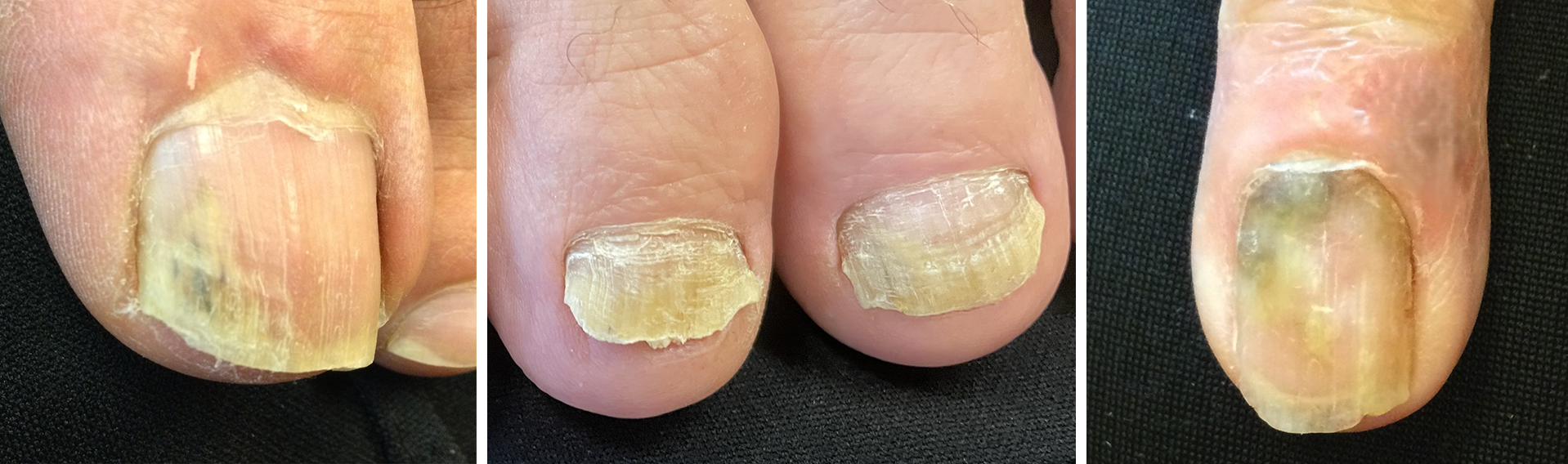
Nails can provide clues to the existence of an underlying medical condition or illness. This can show up as discoloration, irregularities in the surface of the nail (pits, dents, depressed lines), changes in the shape and size of the nail, changes in the nail bed (the area of skin underneath the nail), and changes in the blood vessel pattern around the nail fold.
Tumors and skin cancers can occur in the nail. New brown lines on nails can be due to a mole or a cancerous mole, i.e. melanoma. If you notice a new color change on a nail or skin around the nail, you should seek dermatologic evaluation.
Remove nail polish before your appointment so all nails can be examined, even if you are only concerned about 1 nail.
Nail Care
- Avoid pushing back and cutting the cuticles. This damages the nail matrix causing deformities in the nail and breaks the seal between the skin fold and nail that keeps germs out.
- Avoid using a file on the top surface of the nail to make it smoother. This causes the nail to become thin and fragile.
- Avoid aggressive cleaning underneath the nail with sharp instruments. This damages the nail isthmus causing the nail plate to separate from the nail bed. This creates a space for germs to enter under the nail.
- Wear protective gloves when doing wet household chores.
- Minimize excessive exposure to water. Minimize exposure to strong alcohols or acids and frequent use of nail polish remover. These chemicals cause dehydration of the nail plate resulting in brittleness. The nail can crack, peel, and crumble.
- Moisturize nails every time after washing.
- Only water-soluble nail lacquers can help improve nail fragility.