Scar tissue is part of the normal healing process that occurs when skin has been injured. Scars can be thicker and more raised than normal skin or conversely can be thinner, appear wrinkled, and depressed relative to surrounding skin. Certain areas of the body have an inherent tendency to heal with thicker scar tissue, such as the jaw, chest, shoulders, and back. A keloid is a scar that grows beyond the original area of the wound. There is a dysregulation in wound healing that results in overproduction of collagen over a much longer time than in normal healing. It is thought that high levels of transforming growth factor-β produced by fibroblasts and macrophages are responsible for inducing thick scars and keloids.
Thin, depressed scars are due to destruction of collagen and are commonly associated with acne. Inflammation caused by acne releases enzymes such as collagenases that destroy collagen.
Optimal improvement in scars requires multiple treatment sessions over long periods of time. It can take several months to appreciate improvement in scars from treatments.
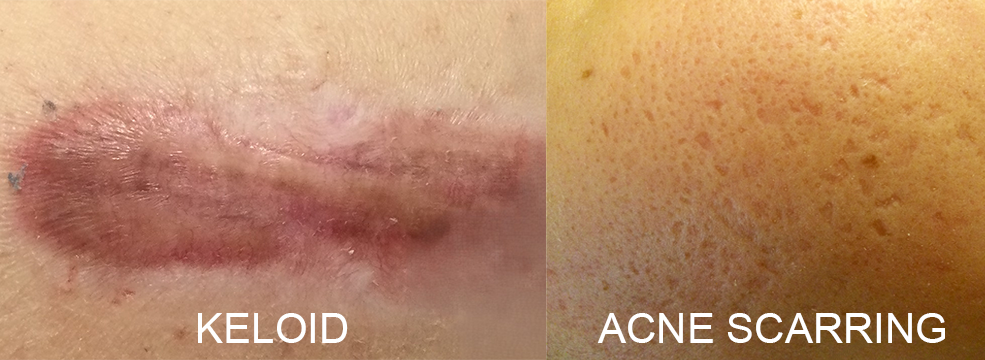
Treatment choices are dependent on the type of scar, color of the scar, skin type, age of the scar, and location. Therapeutic options include: chemical peels, subcision, microneedling, platelet rich plasma, laser, filler injections, prescription topical medications, medication injections, and laser.
How to Care for a Wound
The appearance of a scar often depends on how well the wound heals.
Proper wound care can decrease the chance of infection and maximize healing.
- Keep the wound clean by washing daily with soap and water to remove debris and keep germs away.
- Apply Vaseline or Aquaphor ointment to keep the wound moist. This prevents the skin from drying out and forming a scab. Wounds with scabs take longer to heal and cause itching.
- Cover the wound with an adhesive bandage.
- Change the bandage daily to keep the wound clean.
- If you have skin that is sensitive to adhesives, try a non-adhesive gauze with paper tape.
- If you have stitches, follow the advice that you were given by the physician that did the procedure.