Rosacea is a chronic, frustrating skin disorder that is characterized by the following symptoms: easy flushing, intermittent facial redness, facial bumps and pustules, and dilated blood vessels. Stinging, burning, and swelling of the skin are commonly present. Patients suffering from rosacea have difficulty finding skin care products that do not irritate their skin. In severe cases, thickening and irregular enlargement of the tissues on the nose, chin, forehead, cheeks or ears may occur causing permanent disfigurement.
Rosacea can affect the eyes. Patients experience burning and stinging of eyes, redness, a gritty sensation in the eyes, light sensitivity, dryness, and swelling of eyelids. Ocular rosacea can occur independently of rosacea involving skin. Left untreated, ocular rosacea can result in impairment of vision.
There are comorbidities associated with rosacea: hyperlipidemia, hypertension, inflammatory bowel diseases, metabolic disorders, cardiovascular disease, diabetes, celiac disease, migraines, rheumatoid arthritis, multiple sclerosis, Parkinson's disease, depression, and anxiety. It is important to have a thorough medical evaluation with appropriate laboratory studies to evaluate the presence of these medical conditions. Managing comorbidities has been shown to improve control of rosacea symptoms.
Approximately 50% of rosacea suffers have a family history for rosacea. Having Northern European or Celtic ancestry also increases one's risk for developing rosacea.
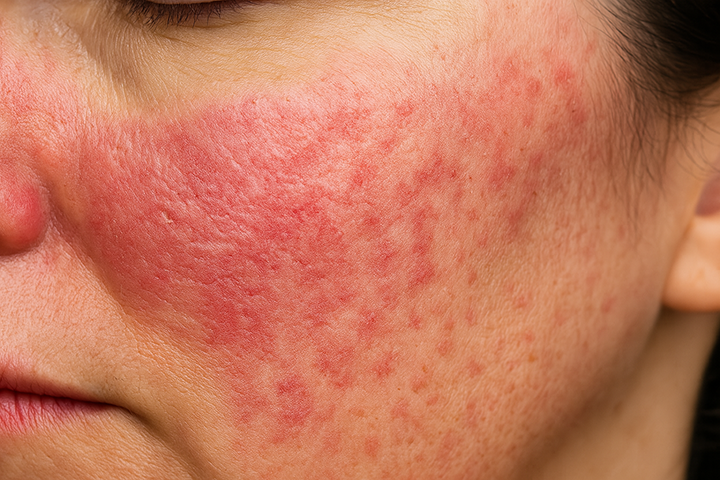
Rosacea is akin to having a super sensitive alarm system installed in your home. Skin cells in rosacea are primed to overproduce certain antimicrobial peptides such as cathelicidins and defensins. These peptides serve to protect the skin from bacterial, fungal, and viral infections. Due to immune dysfunction, genes that are responsible for controlling the intricacies of neurologic signaling to blood vessels and peptide signaling between skin cells become overactive. This produces inflammation that manifests as redness, flushing, and swelling. Heightened skin sensitivity causes stinging, irritation, and itching.
There are internet discussions about a skin mite called Demodex folliculorum causing rosacea. In fact, this mite is part of the normal skin microbiome. In patients with rosacea, there can be increased numbers of Demodex but this is not a consistent finding. Normal numbers of Demodex are tolerated by the immune system, but higher numbers can result in inflammation as a hypersensitivity response. Demodex is not the fundamental cause of rosacea.
Treatments target normalizing the overactive immune response in the skin to decrease the presence of inflammatory antimicrobial peptides. Understanding and avoiding triggers that stimulate rosacea receptors in the skin is important. Hot or cold temperatures or even wind can cause rosacea to flare as can consuming certain foods and alcohol. It is well established that ultraviolet radiation from the sun reacts with specific receptors on skin cells (called transient receptor potential vanilloid1) causing rosacea to flare.
A multi-modality approach offers the best control for rosacea.
Facial redness and enlarged blood vessels can be treated with laser and intense pulsed light in combination with prescription topical and oral medications to control inflammation.